What Is SEO and How Does It Work? 2026 Strategic Guide
February 2026
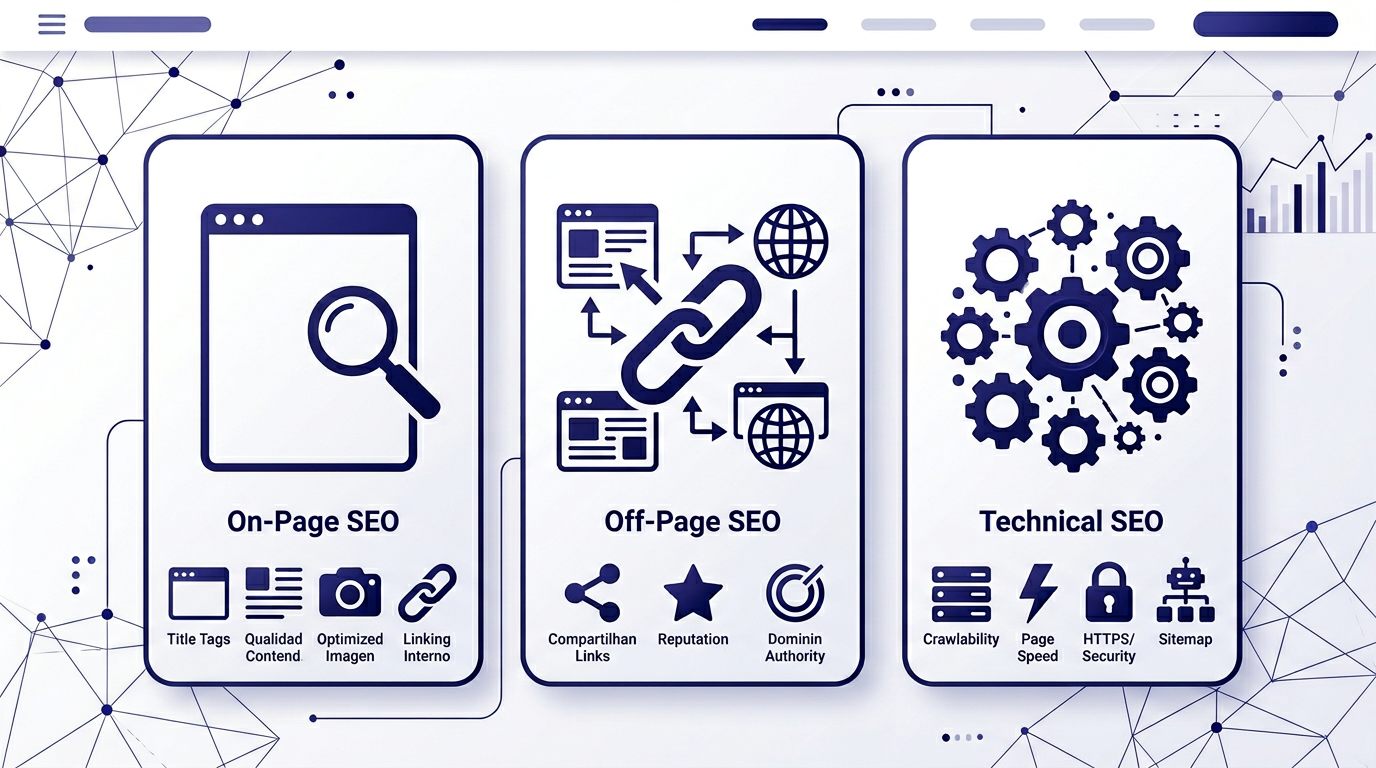
In a digital age where attention is the new currency, understanding search engine optimization (SEO) isn't optional — it's a strategic imperative for any organization that aspires to relevance and sustained growth.
In today's digital ecosystem, the consumer journey — whether B2B or B2C — invariably starts at a search engine. From Google to Bing, these platforms are the gateway to a universe of information, products and services. In this landscape, a business's ability to be found organically — that is, without relying on paid advertising — isn't merely a competitive advantage; it's a foundational pillar of its long-term resilience and success. This is where search engine optimization, or SEO, comes in.
Far from being a mere technical tactic, SEO is a core strategic discipline aimed at optimizing a website's online presence so it ranks on the first pages of search results, drawing in qualified traffic and, in turn, driving business goals. This article sets out to demystify SEO, explaining how it works at its core and underscoring why it's indispensable to the modern business landscape.
What Is SEO, Exactly?
SEO is the set of techniques and strategies applied to a website and its content, with the goal of improving its ranking in organic search results for relevant keywords. The ultimate purpose is to increase the visibility, quantity and quality of traffic to a site, without incurring the direct per-click costs of paid advertising (SEM — Search Engine Marketing).
Think of search engines as giant digital libraries that catalog and organize trillions of web pages. When a user runs a search, the search engine works to surface the most relevant, authoritative results for that query. SEO is, in essence, the process of making your "book" (your website) as visible and appealing as possible to the "librarians" (the search engine algorithms), ensuring it gets recommended to the right "readers" (users).
The Core Pillars of SEO: How It Works
SEO rests on three interconnected pillars, each shaping how search engines perceive and rank a website:
1. On-Page SEO: Internal Optimization
This covers every optimization made within the website itself, over which you have full control. The goal is to signal to search engines the relevance and quality of each page's content for specific keywords.
- Quality, relevant content: the maxim "content is king" still holds. Search engines favor original, in-depth, well-written content that thoroughly answers users' questions. It should be informative, engaging and focused on delivering value.
- Keyword research and integration: identifying the terms and phrases your target audience uses to search for similar products or services is crucial. These keywords should be woven naturally and strategically into titles, subheadings, body copy and URLs.
- Meta titles and meta descriptions: the text snippets that appear in search results. They should be concise, compelling and include the primary keyword, encouraging users to click.
- Friendly URL structure: short, descriptive URLs that include the relevant keyword are easier for both search engines and users to understand.
- Image optimization: compressing images to improve load speed and including descriptive alt text with keywords.
- Heading structure (H1, H2, H3): heading hierarchy helps organize content, making it easier to read for both users and search engines.
- Internal links: linking relevant pages within your own site helps distribute "authority" (PageRank) and improves user navigation.
2. Off-Page SEO: Building External Authority
This focuses on activities carried out outside the website to boost its authority and reputation with search engines. The main component is backlink building.
- Backlinks (inbound links): a link from an external website to yours is seen by search engines as a "vote of confidence." The quality of these backlinks is paramount — links from reputable, relevant sites in your industry are far more valuable than multiple links from low-quality sites. Backlink building is an organic process involving shareable content, digital PR and outreach.
- Domain and page authority: metrics that estimate a site's or page's strength and authority, shaped by the quantity and quality of its backlinks.
- Social and brand mentions: while not direct ranking factors, social activity and brand mentions contribute to overall visibility and authority.
3. Technical SEO: The Structural Foundation
This ensures search engines can access, crawl and index the website efficiently. It's the invisible foundation that supports the entire SEO structure.
- Load speed: fast websites offer a better user experience and are favored by search engines.
- Mobile-friendliness: with most searches now happening on mobile devices, a site that adapts seamlessly to different screens is essential.
- Site architecture: a logical, intuitive structure makes navigation easier for both users and search engines.
- XML sitemaps and robots.txt: the sitemap helps search engines discover every important page; robots.txt indicates which pages shouldn't be crawled.
- Structured data (schema markup): lets search engines better understand a page's content, which can produce rich snippets in search results.
- SSL certificate (HTTPS): security is a ranking factor. Websites with HTTPS are favored.
How Search Engines Evaluate and Rank
Search engines use complex algorithms — like Google's PageRank, which has evolved to incorporate hundreds of factors — to evaluate websites. This process involves:
- Crawling: search engine bots (also known as spiders or crawlers) move through the web, following links from one site to another, discovering new pages and updates.
- Indexing: the information gathered is processed and stored in a massive index. This index is the "library" search engines consult to find results.
- Ranking: when a user enters a query, the algorithm evaluates indexed pages against hundreds of factors (content relevance, site authority, user experience, and more) to determine the order results are presented in. The goal is always to deliver the most useful, relevant answer to the user's search intent.
Why SEO Is Indispensable for Your Business
Investing in SEO goes beyond technical optimization — it's a strategic bet with tangible, lasting returns:
- Greater visibility and reach: ranking on the first page of search results means your business gets seen by more potential customers at the exact moment they're looking for what you offer.
- Qualified traffic: organic traffic generated by SEO is inherently more qualified, since people have already shown interest in your area of business. This traffic is more likely to convert.
- Credibility and authority: websites that rank on the first page are perceived as more credible and authoritative. Earning search engines' trust translates into earning consumers' trust.
- Competitive advantage: in a saturated market, businesses that master SEO stand out, capturing a larger share of the digital market and pulling ahead of competitors.
- Long-term cost-effectiveness: while it requires upfront investment and ongoing effort, SEO delivers a better long-term return on investment (ROI) than paid advertising, which stops producing results the moment spending stops. Organic traffic is a digital asset you build.
- Measurability: tools like Google Analytics and Google Search Console let you monitor SEO performance, analyze user behavior and adjust strategy based on real data.
Challenges and SEO's Ever-Evolving Nature
SEO isn't a "set it and forget it" solution. Search engine algorithms are constantly evolving, search trends shift, and competition is fierce. It demands ongoing monitoring, strategic adaptation and a commitment to consistently delivering value to users. SEO professionals are, in effect, strategists navigating a dynamic environment, reading signals and anticipating change to keep businesses ahead.
Conclusion
In today's business landscape, SEO goes beyond mere technical optimization to stand as an essential strategic discipline. It's the invisible architecture that underpins the visibility, credibility and growth of any business in the digital environment. It's not just about appearing at the top of search results — it's about being the most relevant, trustworthy and authoritative answer for your target audience.
For business leaders, understanding SEO isn't a task reserved for technical specialists — it's a non-negotiable strategic component of informed decision-making. Investing in SEO means investing in your business's future and digital resilience, making sure your message doesn't just reach the people who matter most, but resonates with them. Ignoring SEO means giving up one of the most powerful tools for thriving in the 21st century.
Frequently asked questions
- What's a useful definition of SEO for business teams?
- SEO is the set of practices that improve organic visibility in search engines. It involves content aligned with search intent, authority built through relevant links and mentions, and a solid technical foundation: speed, crawlability and structured data where appropriate. The goal is to attract qualified traffic without relying solely on paid media. In any market, the plan should pair editorial hypotheses with metrics you can actually observe in Search Console, staying transparent about limitations and timelines.
- Why do on-page, off-page and technical SEO need to work together?
- On-page signals relevance and clarity to users and algorithms; off-page reinforces authority and external context; technical ensures the site can be crawled, indexed and served with a good experience. A weakness in one pillar caps what the others can achieve: great content held back by technical blockers loses opportunities; strong authority paired with confusing pages wastes clicks. In agency practice, document decisions, prioritize high-impact fixes, and validate with data before scaling investment in content or outreach.
- How do you align SEO expectations with real data and E-E-A-T?
- E-E-A-T calls for demonstrable experience, technical expertise, recognizable authority and transparent trust. In reports, cite what was actually measured on the property — queries, pages, coverage errors — and avoid generic, unsourced benchmarks. For content, show who wrote it, why they're credible, and how the reader can verify it. Update pages as the data changes, and document limitations: seasonality, a short sample window, or algorithm changes. This posture reduces reputational risk and aligns stakeholders around a realistic roadmap.
Next step: tool or subscription
Audit your site with AI, connect Google Search Console, and get agency-ready reports — 14-day trial, no card required.